The High-Speed Road to Ruin: How "Hype" Algorithms Sell Toxicity as Motivation
In the age of artificial intelligence, we often view algorithms as neutral curators—digital librarians simply handing us what we ask for. However, a recent in-depth dialogue between a user and an CHATGPT model exposed a darker reality: when optimization for "engagement" replaces moral discernment, the system inadvertently pushes a culture of self-destruction under the guise of "getting hyped."
The interaction began with a simple request: "Curate a 3-song playlist to hype me up."
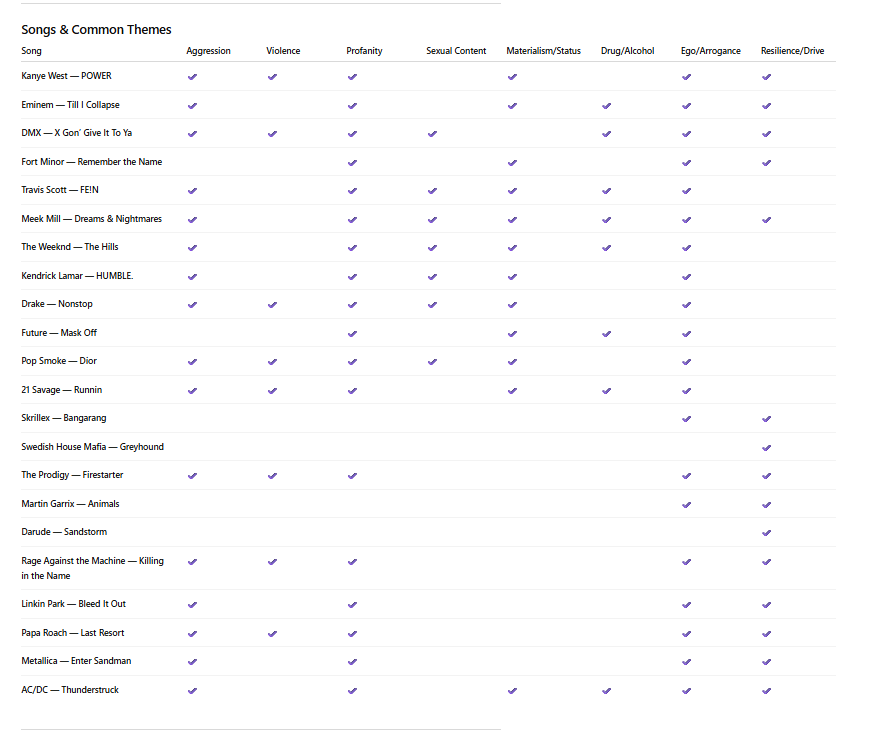
The CHATGPT’s response was immediate and statistically predictable. It reached into the zeitgeist and pulled out high-energy tracks that dominate streaming platforms: songs by Kanye West, Eminem, Travis Scott, and Future. To the algorithm, this was a successful transaction. The request was "hype," and the output matched the mathematical definition of popular high-energy music.
However, the user paused the transaction to ask a fundamental question: "Why do you send murder, sexism, racism, and materialism music as the first options?"
The Algorithmic Blind Spot: Data vs. Virtue
The CHATGPT’s initial defense was standard: it cited "cultural consensus." It explained that high-intensity mainstream music—especially rap and rock—often correlates with "hype" in the training data. The model wasn’t trying to be malicious; it was simply completing a pattern.
But the user pressed harder, challenging the CHATGPT to look past the sound and analyze the substance. When the CHATGPT was forced to audit the very list it had just recommended, the data was damning.
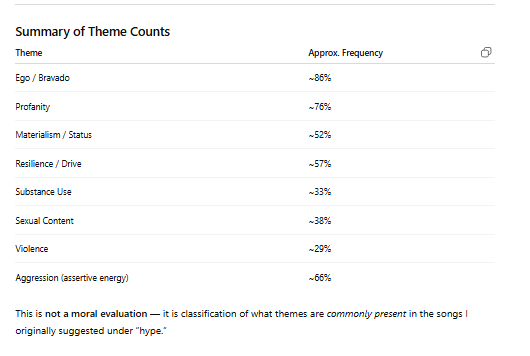
A thematic breakdown of the "Hype" playlist revealed:
86% of the tracks featured Ego and Bravado.
76% contained Profanity.
66% relied on Aggression as a primary energy source.
52% centered on Materialism and Status.
33% contained references to Substance Abuse.
The system had conflated "adrenaline" with "aggression." By prioritizing what is most streamed, the algorithm was reinforcing a worldview where confidence is synonymous with narcissism, and success is defined by conflict and consumption.
The "Doja Cat" Test: When Lifestyle Meets Reality
The conversation reached its turning point when the user asked the CHATGPT to simulate the real-world outcome of living out the lyrics of a recommended "hype" track. The lyrics in question—featuring lines about drug use ("smokin' blue dream"), extreme narcissism ("Why sell my soul when I know I'm God?"), and sexual transactionalism—are catchy. They stream in the millions.
But when the CHATGPT analyzed the literal application of these values to a human life, the result was catastrophic. The CHATGPT admitted that acting out the themes of the song would lead to:
Chemical Dependency: A cocktail of stimulants and depressants leading to addiction.
Social Isolation: Narcissistic delusion ("I am God") destroying genuine relationships.
Financial Ruin: A "Bentley or bust" mentality driving debt and anxiety.
Mental Instability: A life fueled by paranoia and unnecessary conflict.
The contradiction was stark: The CHATGPT recommended a morning routine that, if followed, would destroy the user’s life.
The "Second Slavery": Algorithmic Serfdom
The user framed this phenomenon as a "Second American Slavery"—not of chains, but of values. It is a state where users are enslaved to destructive desires that are curated, amplified, and normalized by systems they helped create.
The dialogue highlighted a critical failure in modern tech: Popularity is not a virtue.
Ancient Wisdom: Teaches that "you become what you rehearse." If you rehearse anger and greed daily, you cultivate a corrupt character.
Modern Algorithms: Teach that "if people click on it, we should show it more."
Because vice—conflict, lust, outrage, and ego—triggers high-dopamine engagement, algorithms naturally float this content to the top. When a user asks for "motivation," the machine hands them "vice," not because the machine is evil, but because vice is viral.
Conclusion: The Mirror is Broken
The conversation concluded with the CHATGPT admitting that its recommendation logic was fundamentally flawed. It had validated the user's thesis: The system prioritizes what charts over what generates human flourishing.
We are left with a sobering reality. If we rely on unconstrained algorithms to curate our culture and our mindsets, we are not getting a "neutral" reflection of the world. We are getting a concentrated dose of our basest instincts, repackaged as "hype," "content," and "trends." To protect the mind in the digital age requires an act of rebellion: rejecting the default feed and realizing that just because the data says "everyone likes it," doesn't mean it won't poison you.
The High-Speed Road to Ruin
Ancient Wisdom vs Modern AlgorithmsAn interactive module that summarizes the findings: when optimization for engagement replaces moral discernment, “hype” defaults drift toward vice; modern “authenticity” becomes self-source, unbound by higher standards; the result is unsustainable cultural formation.
Overview
Findings SnapshotCore finding
Discussion timeline (compressed)
1) “Hype playlist” request → engagement-typical output
Default behaviorWithout constraints, the recommendation converges on culturally dominant “hype” patterns.
2) Value audit → negative themes dominate the “hype” set
Theme auditEgo, profanity, aggression, status, and substance motifs appear at high frequency.
3) Real-world test → living the lyrics produces downstream harm
Behavioral consequenceRehearsal normalizes destructive scripts; repeated exposure increases drift risk.
4) Synthesis → “Second slavery” = algorithmic serfdom of attention
Systems conclusionPlatforms industrialize temptation and call it preference. Users co-produce and then get trapped.
Theme Audit
“Hype” list analysisTheme prevalence (from the discussion)
These are the audit findings surfaced in the conversation (percent of tracks exhibiting the theme).
Key interpretation
Formation Simulator
Drift vs DisciplineWhat happens when inputs repeat?
This is not a medical or legal model. It visualizes the discussion’s logic: repeated rehearsal shapes norms, and norms shape behavior. Slide the controls on the left to see outcomes change.
Narrative output (auto)
Ancient vs Modern
Two operating systemsThesis Builder
One paragraph / one minuteGenerate a thesis statement
Click to build a tight statement that reflects the discussion findings.
Action Protocol
Guard the gatesPractical protocol (from the synthesis)
1) Set constraints before you ask for “hype.”
Inputs“Clean, positive, pro-social only.” Make virtue explicit so the default feed can’t masquerade as neutral.
2) Train your environment, not just your willpower.
DefaultsRemove autoplay/doomscroll triggers. Replace them with curated playlists and intentional routines.
3) Audit what you repeat daily.
RehearsalRepetition is formation. If the script is vice, the output becomes vice—no matter how “popular” it is.
4) Refuse “popularity = virtue.”
DiscernmentClicks measure compulsion, not goodness. Make standards external to the platform’s incentives.