
Robert Norris:
The Roger Bannister of Ironman
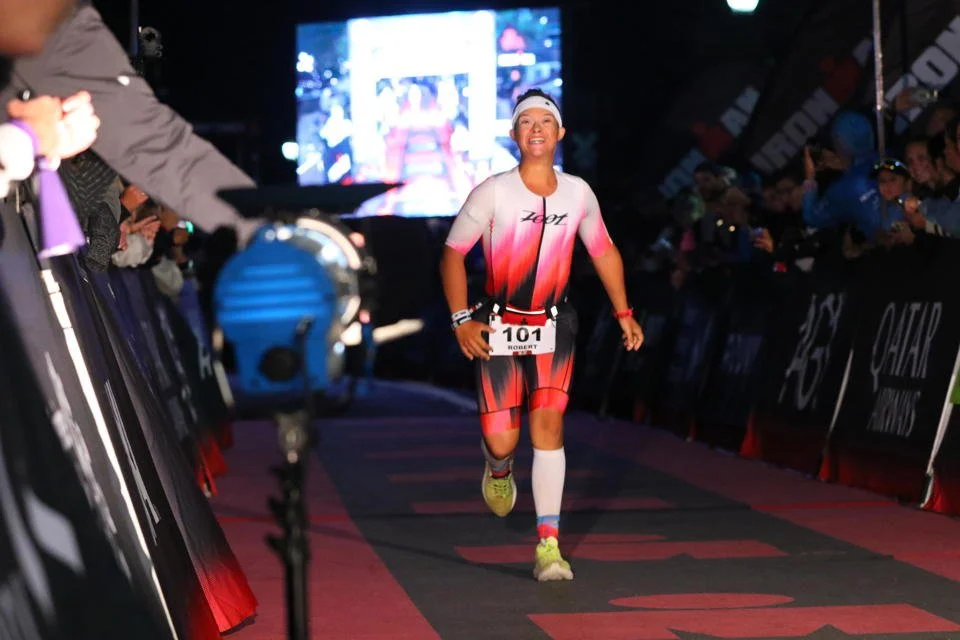
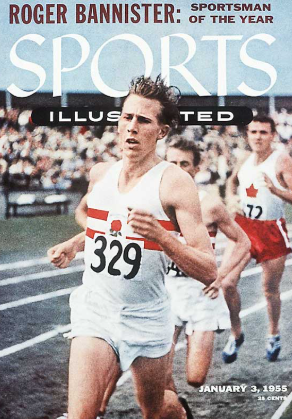
In 1954, Roger Bannister broke the four-minute mile. At the time, experts insisted it was physiologically impossible. When Bannister did it anyway, the barrier didn’t just fall for him. It fell for everyone. Within months, other runners followed. The limit had never been physical. It had been belief.
Robert Norris has done the same thing for Ironman.
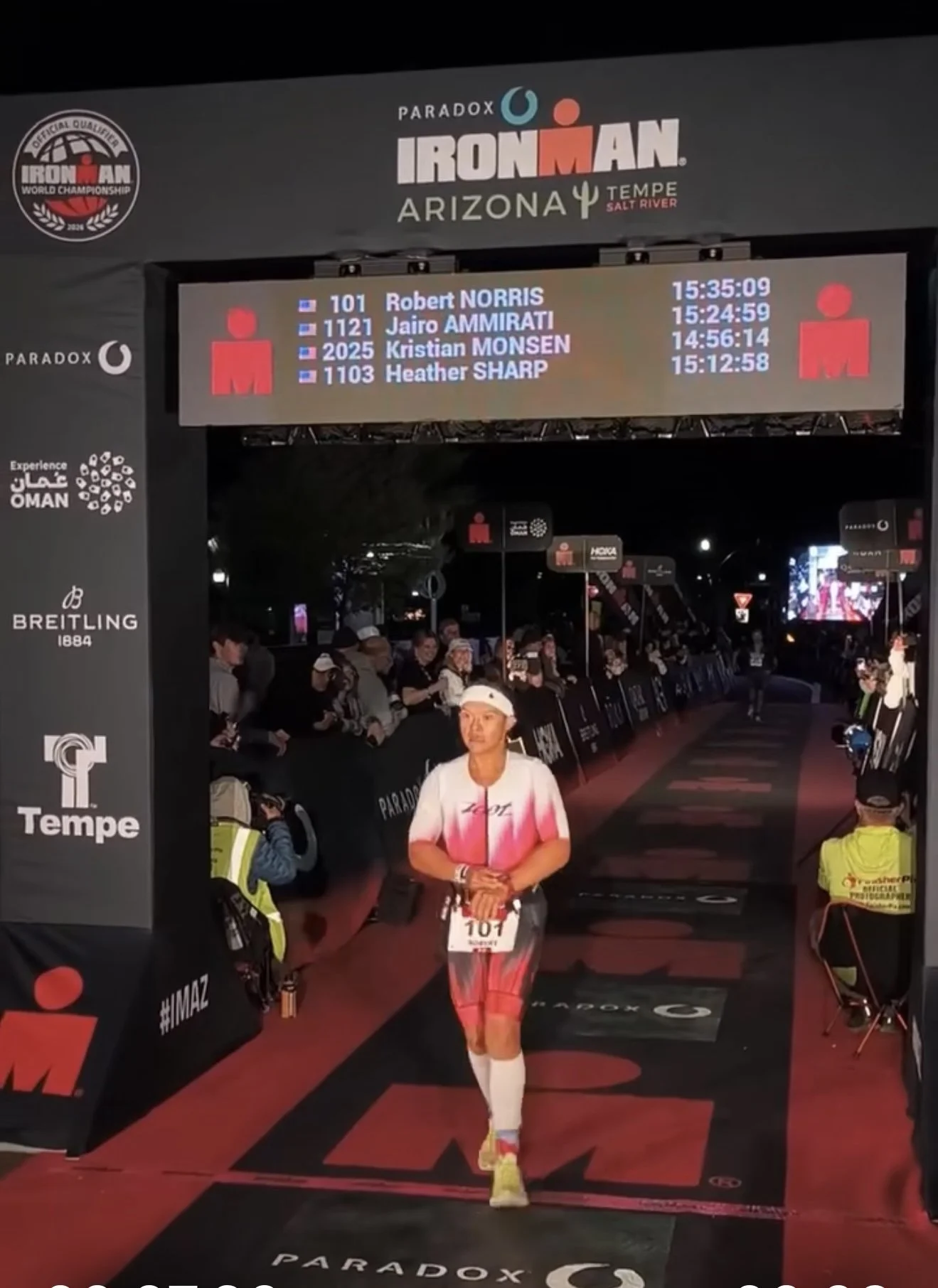
Robert Norris is the first athlete with Down syndrome to complete a full-distance IRONMAN independently, unguided, and unassisted. The feat was formally recognized by Guinness World Records because it had never been done before.
Like Bannister, Robert didn’t just set a record. He overturned an assumption the sport had treated as fact.
The Barrier Before Robert
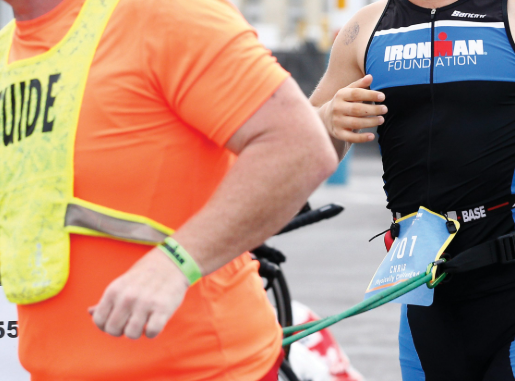
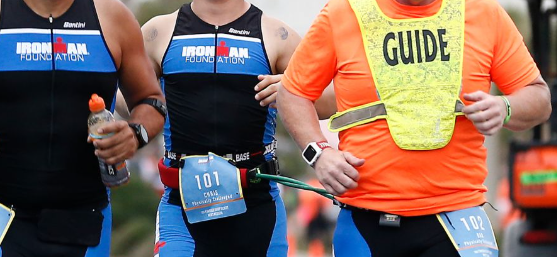
For decades, endurance sport operated on a quiet consensus: athletes with Down syndrome could not complete an Ironman independently. They were expected to race tethered or guided. That expectation wasn’t written into rulebooks, but it was enforced through coaching norms, medical advice, and race-day practice. The sport invested heavily into the infrastructure to sell access using this model.
When Robert began training, he was told he would need a guide. He was told independence wasn’t possible. He was told the risk was too high.
The conclusion was always the same: this could not be done.
Robert trained anyway.
He Did The Impossible
At IRONMAN Arizona, Robert swam 2.4 miles, biked 112 miles, and ran 26.2 miles. He crossed the finish line alone. No tether. No guide. No accommodations beyond what the race already allowed.
That finish changed the frame.
It demonstrated that the limitation had never been biological. It was cultural. It was procedural. It was a belief repeated until it felt like fact.
Robert didn’t complete an Ironman to prove something about himself. He completed it to prove the assumption wrong.
Why the Comparison to Bannister Holds
1. He disproved an “impossible” narrative
Before Bannister, experts said the human body could not run a mile under four minutes.
Before Robert, experts said an athlete with Down syndrome could not complete an Ironman independently.
Both claims were treated as settled science. Both were overturned by a single performance.
2. He changed how the sport thinks
Bannister’s run altered training, expectations, and ambition across distance running.
Robert’s finish is already affecting how coaches approach mixed-ability athletes, how race directors think about independence, and how families assess long-term athletic potential. Once independence is demonstrated, it can no longer be dismissed as unrealistic.
3. He shifted the tone from inspiration to performance
Bannister wasn’t celebrated because he was inspiring. He was celebrated because he was elite.
Robert belongs in the same category. He trained with structure. He raced with discipline. He finished under the same rules as everyone else. This was not a symbolic achievement. It was a performance outcome.
4. He created a new lane
Bannister opened the door for generations of runners.
Robert has opened the door for independent Ironman athletes with Down syndrome, for mixed-ability competitors who want autonomy, and for families who now have a concrete example instead of a hypothetical ceiling.
The Legacy
Bannister’s legacy wasn’t the time on the clock. It was the realization that the limit had been imaginary.
Robert Norris’s legacy will be the same.
He demonstrated that independence is possible. He forced the endurance world to re-examine its assumptions. He showed that discipline, consistency, and preparation matter more than the categories others use to define capability.
Robert Norris is not an exception to the rule. He is the example that rewrites it.
No politics. No financial motivation. He did it through his own internal drive.
PRIMARY
Robert Norris
Ironman
IRONMAN Arizona
Down syndrome
Guinness World Records
Endurance sports
Triathlon
Full-distance Ironman
PERFORMANCE & SPORTS
Elite endurance
Independent racing
Unguided athlete
Long-distance triathlon
Human performance
Athletic discipline
Competitive endurance
HISTORICAL / COMPARATIVE
Roger Bannister
Four-minute mile
Breaking barriers
Sports history
Record-breaking athletes
MEDIA & DISCOVERY
Inspirational athletes
Sports documentary
Human potential
Ironman World Championship
Endurance training
Elite mindset
CULTURE & IMPACT
Disability inclusion
Mixed-ability athletics
Adaptive sport
Athletic independence
Changing assumptions
Redefining limits